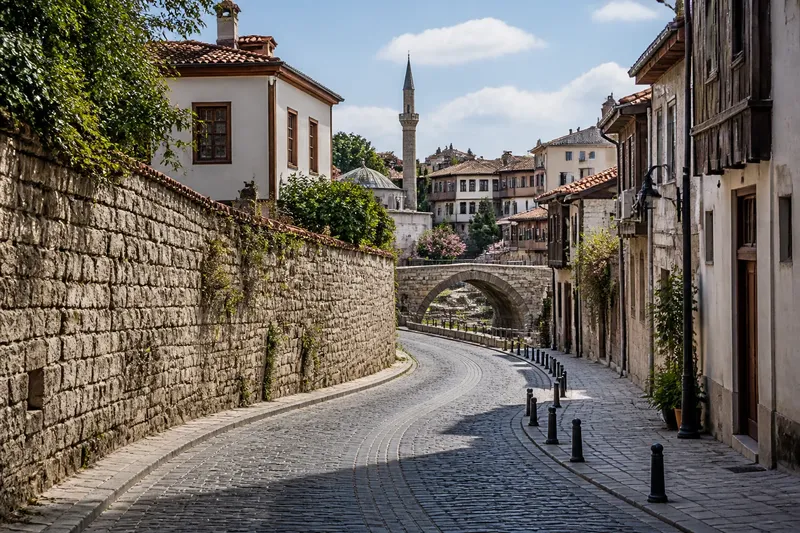
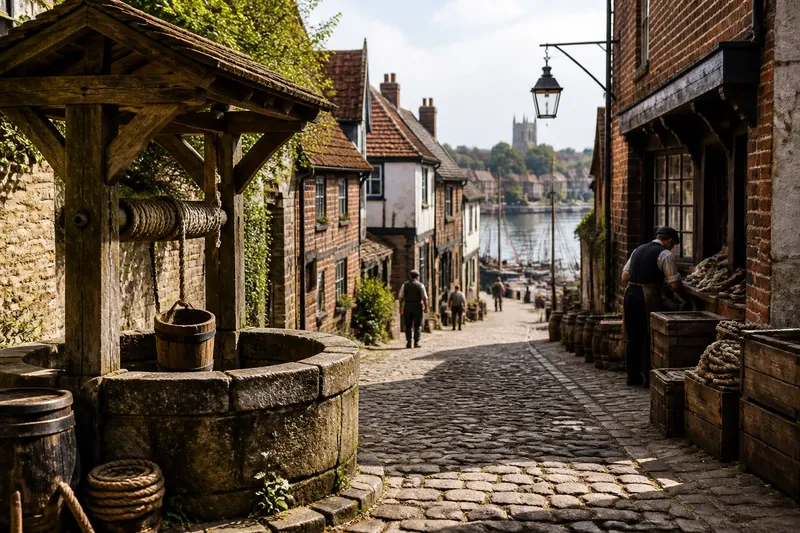
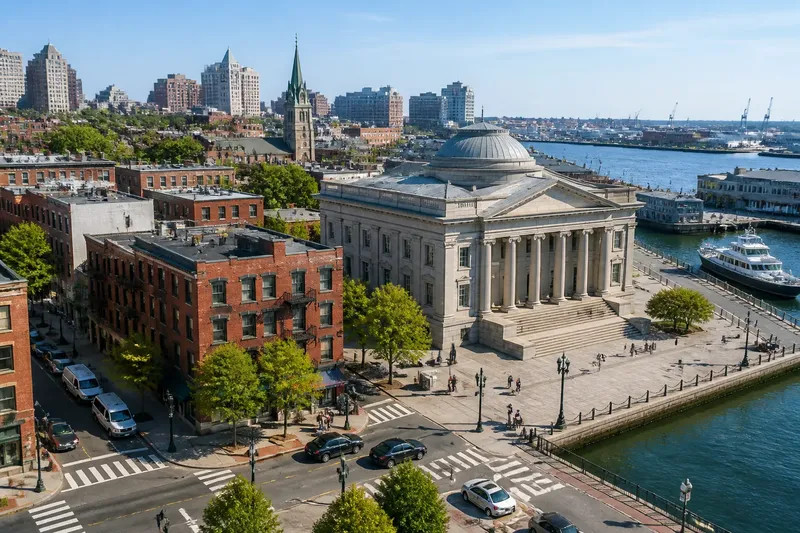
Square, Plaza or Courtyard: What Changes the Feel of a Public Gathering Place?
Compare a square, plaza, and courtyard by enclosure, entrances, and movement to understand why a public gathering place feels welcoming, exposed, or hard to cross.
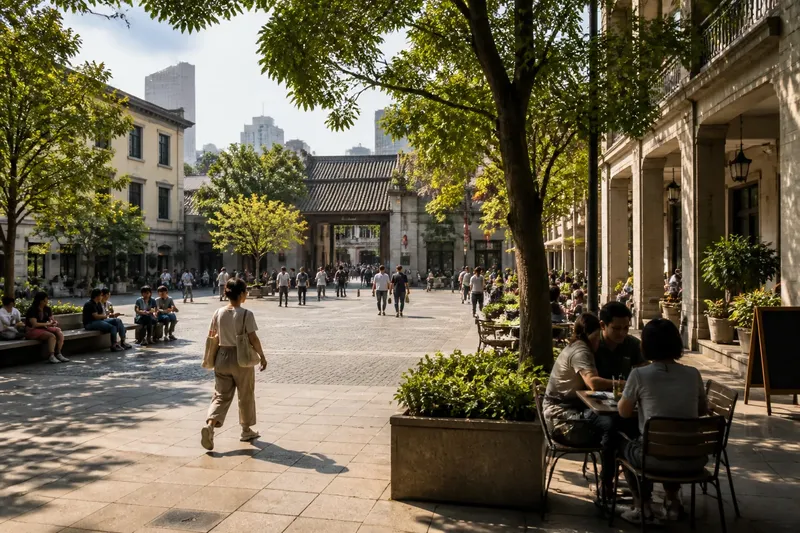
Why does one public gathering place invite you to linger while another seems to push you through? A square, plaza, or courtyard can occupy similar ground, yet its edges, entrances, and paths shape how people use it. When a place feels awkward, the cause is often not its name but the way its form handles arrival, stopping, and crossing.
Read the edges before judging the open space
A square is commonly a defined open area within a street network, with buildings or other edges helping it register as a distinct room in the city. A plaza is often more open to surrounding streets and can feel like an extension of the pedestrian route. A courtyard is enclosed or partly enclosed by buildings, walls, or colonnades, so its boundaries are especially easy to sense.
These are useful descriptions, not rigid categories. A city may call a place a plaza even when its edges feel square-like, or use “courtyard” for a space that anyone can enter. To understand the experience, look at what a person can see and reach from the ground rather than relying on the label.
Notice whether the edge is continuous or interrupted, and whether it offers doors, shopfronts, arcades, steps, or blank walls. A defined edge can make a place feel held together; a gap can connect it to nearby streets or make it feel exposed.
Diagnose why a place feels hard to enter
People may pass a gathering place without stepping into it when the entrance is difficult to read. A broad opening can seem like a route for traffic rather than an invitation to enter, while a narrow gap between buildings may be easy to miss. The trouble is not simply the number of entrances; it is whether they look usable from the approaches people actually take.
Start by watching the space from the sidewalk, without assuming where visitors should go. Trace the visible openings and check whether they lead to a continuous public route or stop at a barrier, private frontage, or confusing level change. If entry remains unclear, signs or a more legible threshold may help, provided they fit the site and local rules.
Imagine a plaza with one wide opening facing a busy avenue and a quieter side street that meets a blank wall. A visitor approaching along the side street might never notice the entrance; making the existing connection more visible could help people recognize where to enter without changing the plaza’s basic form.
Fix the feeling of exposure without closing the place
A public space can feel too exposed when its boundaries provide little visual shelter. This is common in broad plazas, but a square with long, inactive façades can feel equally bare. The underlying issue is often a lack of places to pause at the edge, not a lack of open ground.
Look for usable thresholds: a bench near a doorway, a low wall set back from the main route, a shaded arcade, or a tree-lined margin. These elements let someone stop without occupying the center of a crossing path. Their placement matters; seating facing a blank wall may not offer the same sense of connection as a seat with a view of the square’s activity.
Courtyards can feel sheltered because their surrounding walls make the boundary clear, but enclosure can also make an unfamiliar visitor wonder whether entry is permitted. A visible entrance and signs of ordinary public use can reduce that uncertainty. Keep the edge welcoming rather than adding barriers that make the courtyard feel private.
Sort out crossings that cut through gathering areas
People often need to cross a square or plaza on their way somewhere else. Trouble begins when the main desire line—the route people naturally choose between two destinations—runs through the same patch where others sit, meet, or watch an event. The result can be a place that feels busy but never settled.
Observe where feet actually travel, then distinguish the through-route from the areas where people pause. A clear path along one side may preserve a quieter center, while a direct route through the middle may suit a space designed as an urban connector. Avoid forcing movement around obstacles in a way that creates new pinch points.
Say a courtyard connects a transit stop with a library entrance, and visitors cut between the two across a cluster of movable chairs. Shifting the chairs toward the courtyard edge could leave a clearer crossing while preserving a place to sit; the visible result to look for is whether both routes remain usable without people weaving around one another.
Choose a response that fits the space
When the problem is uncertain entry, clarify the threshold. When people have nowhere comfortable to pause, improve the edge. When crossing conflicts with gathering, make the preferred route legible. These responses are different because enclosure, entrances, and movement create different kinds of friction.
Before proposing a change, consider the space at different times and from more than one approach. A busy entrance may be quiet at another hour, and a temporary event can redirect movement. Materials, access requirements, ownership, and local rules also shape which changes are appropriate; consult the relevant authority or a qualified professional where needed.
What should you look for in a square, plaza, or courtyard?
Does a courtyard have to be private?
No. “Courtyard” describes a form with a strong surrounding edge, not automatically who may enter it. Look for signs, gates, operating hours, and the way the entrance connects to public paths.
Why can a plaza feel less sheltered than a square?
A plaza may open broadly onto surrounding streets, making its boundary less distinct. A square often reads more clearly as a contained place, although the actual edges matter more than the label.
How can you tell where people want to cross?
Notice the paths people choose between visible destinations, especially where those routes diverge from formal paving. Repeated detours around seats or bottlenecks can reveal that the current layout asks people to share space awkwardly.
What makes an entrance feel welcoming?
A welcoming entrance is visible from the route approaching it and appears to lead into space people may use. Clear sightlines, an unobstructed threshold, and ordinary signs of activity can help visitors understand the invitation.
For a square, plaza, or courtyard, begin with the point of friction: entering, stopping, or crossing. A small adjustment to the relevant edge or route may make the public gathering place easier to read while preserving the distinct character that its form already gives it.