Before Street Signs, How Cities Named Their Routes
Explore how local communities named routes through landmarks, trades, destinations, and speech, and learn how to read those names as clues to urban life.
How did someone give directions before a street sign marked the corner? The answer varied by city and period: people might identify a route by a nearby landmark, a local trade, a destination, or a phrase familiar in their community. These names were practical descriptions, not a single system shared by every place.
Landmarks gave routes recognizable anchors
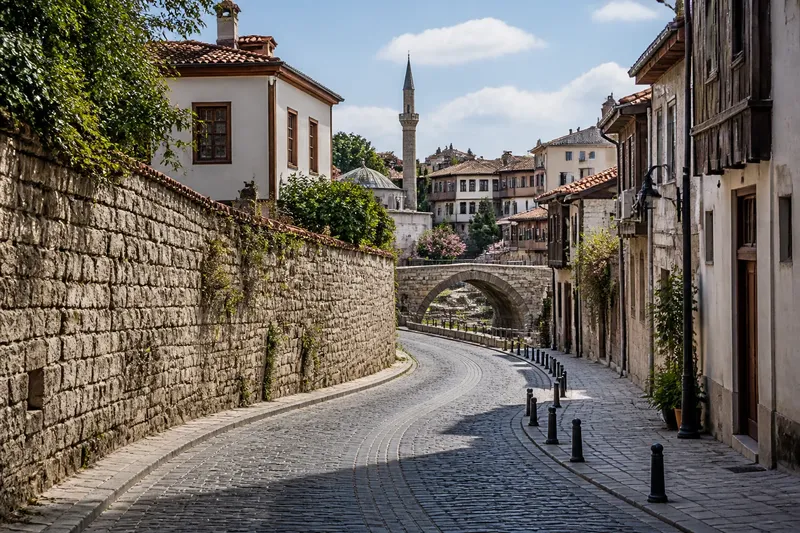
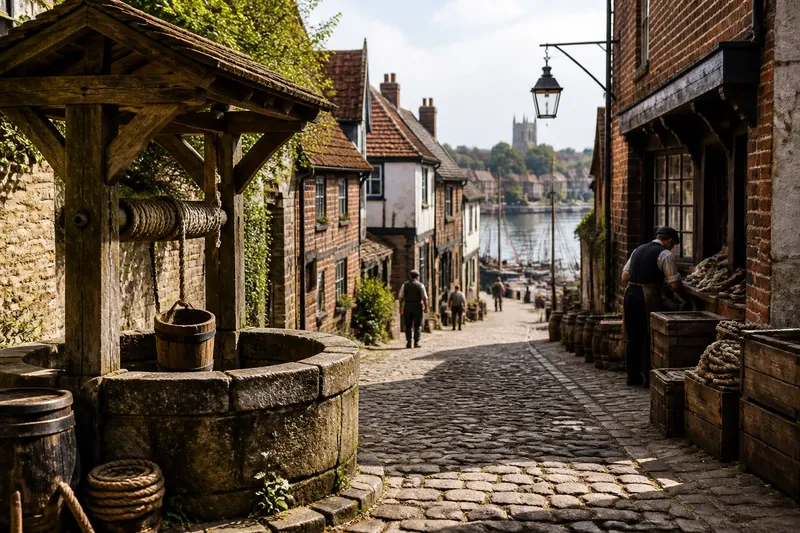
In some towns, residents described a lane by a feature travelers could recognize: a bridge, well, gate, religious building, or prominent tree. The landmark served as a verbal point of reference, helping someone distinguish one path from another without relying on a posted label.
A landmark-based name could remain in use after the feature changed or disappeared. That persistence depended on local habit; people might continue using a familiar phrase because it still identified the route clearly.
Say an invented town has a narrow lane that ends at a public well, and residents call it Well Lane. If the well is later covered, people might keep the name because it still directs neighbors to the same passage.
Trades and destinations shaped route names
Some route names reflected work carried out nearby, such as a cluster of workshops or a place where goods were handled. Others pointed toward a destination beyond the street itself, such as a gate, harbor, neighboring settlement, or agricultural area. These patterns varied locally and should not be treated as a universal naming rule.
A trade-related name does not prove that everyone on the route practiced that craft. It may preserve an association that became familiar in conversation even as businesses and residents changed.
Destination names described a connection between one part of a city and another place. If the destination changed in importance, the name could still linger in local speech, though its continued use would depend on the community.
Local speech could differ from official records
A route name might emerge through repeated use rather than a formal announcement. Residents could shorten a phrase or use a name shaped by the language and routines of their own community; an administrative record might preserve a different label.
Imagine an invented riverside district where dock workers call a passage Rope Walk because rope is stored nearby. A clerk records another name in a ledger, but workers continue using Rope Walk to arrange a meeting. In this situation, the two names reveal different habits of describing the same place, rather than proving that one version was universally accepted.
When reading a historical record, distinguish between a name documented by an office and a name reported in everyday speech. Each can offer a clue, but neither alone establishes what every resident called the route.
What can old route names tell us?
Why could one route have several names?
Different residents or institutions might refer to the same route by a landmark, nearby work, or formal designation. Local usage could also shift over time, leaving more than one version in records or conversation.
Did every route name become official?
No single answer applies across cities and periods. Some names may have been used locally without appearing in formal records, while official labels could coexist with spoken alternatives.
Why might a name outlast the feature it describes?
People may inherit a familiar name through directions and conversation, even after its original landmark or use has changed. Its survival in a particular place needs evidence from local records or accounts.
How can a route name help locate a neighborhood?
A name may point to a destination, a recognizable feature, or a local association that residents used to describe their surroundings. It can suggest how people talked about place, but it does not by itself establish a neighborhood’s formal boundary.
Read route names as local clues, not universal rules
Old route names can preserve useful traces of how people described movement, work, and familiar places. Their meanings depend on local context, so a landmark name in one city should not be assumed to reflect the same naming practice in another.
When you encounter an old route name, ask what feature, activity, or destination it might refer to, then look for local maps, records, or accounts that support that reading. This keeps the name useful as a clue without mistaking a plausible interpretation for a settled fact.